
Lichtenvoorde (G): St. Bonifatius (W. te Riele, 1912-1913)
 Although
the town is much older than that, the parish of Lichtenvoorde was not
founded until 1672, the year when the army of the Prince-bishop of
Munster occupied the town and temporarily restored religious freedom.
Originally the town belonged to the parish of Groenlo while in 1616 the
catholic faith had been banned by the new protestant rulers, who also
confiscated the local chapel for their own use. After the troops from
Munster left in 1674, protestant rule was restored and the catholics
first used several churches and chapels built for them just over the
German border, until a simple barn church could be built in the town itself.
In 1819 a true church was built, a three-aisled building in Neo-Classical style
designed by P. van Waayen.
Although
the town is much older than that, the parish of Lichtenvoorde was not
founded until 1672, the year when the army of the Prince-bishop of
Munster occupied the town and temporarily restored religious freedom.
Originally the town belonged to the parish of Groenlo while in 1616 the
catholic faith had been banned by the new protestant rulers, who also
confiscated the local chapel for their own use. After the troops from
Munster left in 1674, protestant rule was restored and the catholics
first used several churches and chapels built for them just over the
German border, until a simple barn church could be built in the town itself.
In 1819 a true church was built, a three-aisled building in Neo-Classical style
designed by P. van Waayen.
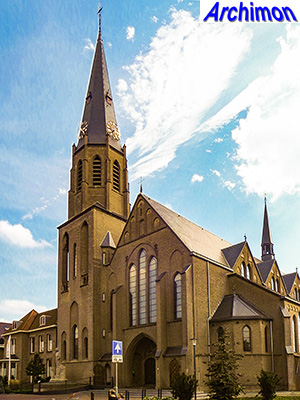
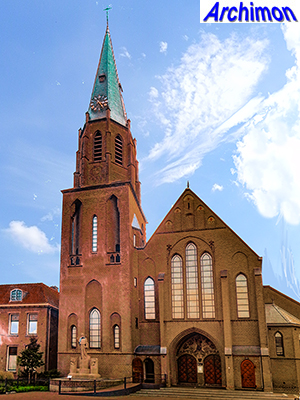
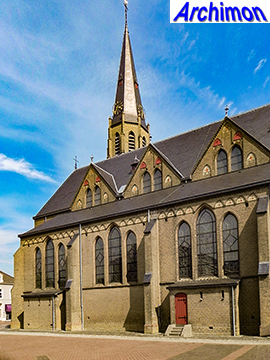
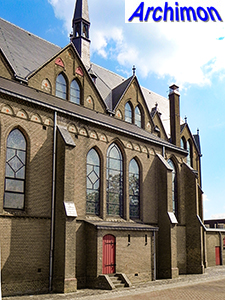
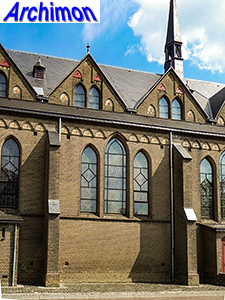
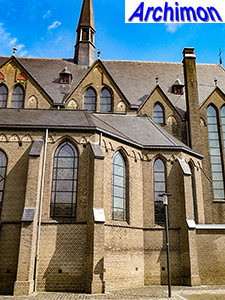
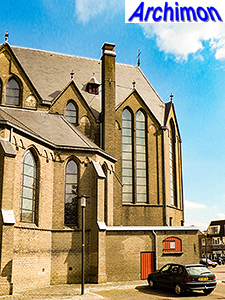
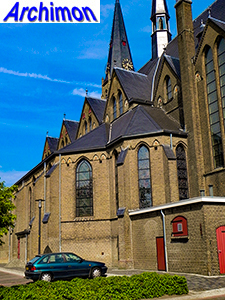
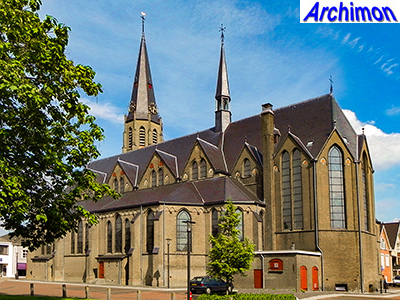
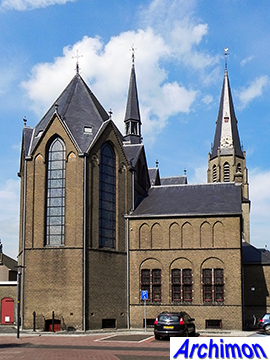
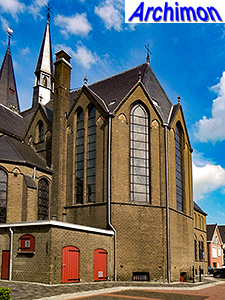
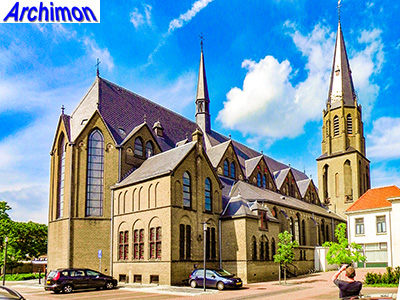
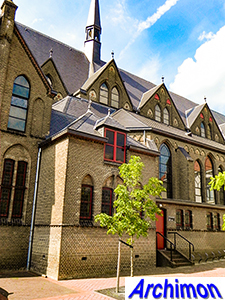
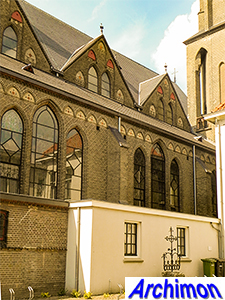
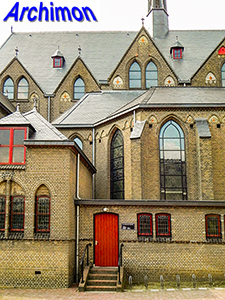
The first plans to enlarge the church were made in 1900, and in 1902 architect W. te Riele offered to make a design free of charge. Because the funds for the construction were insufficient the plan was put on hold. In 1911 Te Riele was finally commissioned to design a completely new, bigger church. Like many churches designed by this architect, it's an unconventional building in Neo-Gothic style. Te Riele was one of the last Neo-Gothic architects in The Netherlands, still designing in this style in the 1930's, but always with a very personal approach.
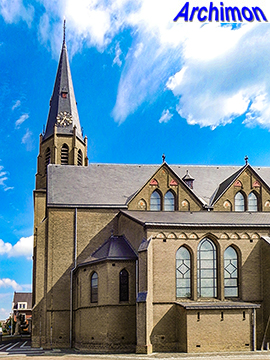
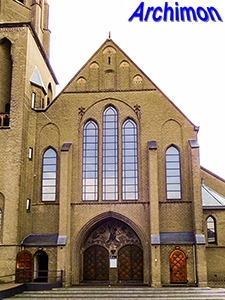
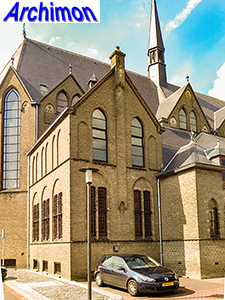
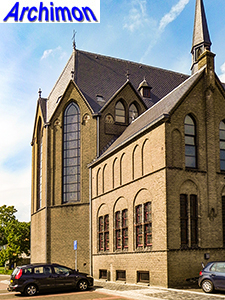
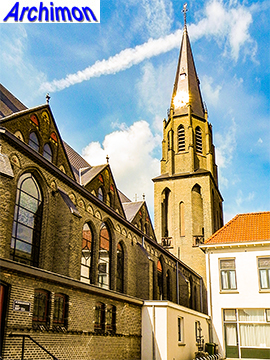
The long nave has a wide central aisle which ends with a choir of the same height and width, covered by the same roof. The side-aisles end in smaller chapels. Inside, the whole is covered by intricate vaults. Instead of a more traditional clerestorey, the interior is illuminated from above by a series of dormer windows, used here by Te Riele for the first time. The front of the church, which points towards the north,consists of a facade with a portal and, standing next to it, the tower. This was the first time, or one of the first times, Te Riele did not plan the tower right in front of the nave, because it was uncertain if it would be build at all. The tower at first glance appears to be square except for the octagonal upper part, but in reality the middle part combines both shapes.
Back to Churches in the province
of Gelderland
Back to Oost Gelre municipality